8 Best Food Cost Software for Restaurants & Food Brands
Food businesses can have particularly complex costing calculations. Products and ingredients often change, raw material prices fluctuate wildly, and everything has an expiration date.
In an industry with notoriously thin margins, a solid costing method is essential to running a profitable business.
Key takeaways:
- Best for packaged food brands: ReciPal. It gives your true cost per batch and per package, with food, labor, packaging and overhead included. It works as both a simple recipe cost calculator or a full on inventory system.
- Best for restaurants: meez for chef-led kitchens, Katana for sales integrations, Restaurant365 for an all-in-one back office.
- How to choose: Match the tool to what you sell, then check that it addresses your specific business needs.
How to Choose Food Cost Software
Start with what you sell. Restaurants and packaged food brands both cost recipes, but they're solving different problems.
| Restaurants | Packaged food brands | |
|---|---|---|
| What you cost | One plate or menu item | One batch, then each unit |
| Batch size | Smaller batches, often cooked to order | Larger production runs |
| Packaging and shipping | Little or none, aside from takeout containers | Jars, lids, labels, cases and shipping boxes on every unit |
| Who takes a cut | Usually no one, since you sell straight to diners | Distributors, brokers and retailers each take a margin |
| Ingredient shelf life | Short, so waste and spoilage drive cost | Longer, but finished goods need lot tracking |
| Product range | Many dishes and variations that change often | Fewer products, made the same way each run |
| Key number | Food cost % of menu price | Cost per unit against wholesale and retail price |
A tool built for one side usually misses what matters to the other. And many CPG products aren't focused specifically on the nuances of the food industry.
Use this checklist to compare tools:
- Built for what you sell. Restaurants need plate cost and menu engineering. Packaged food brands need cost per batch and per package. A product that focuses specifically on the food industry can better meet your needs.
- Full cost, not just food. The tool should add labor, packaging and overhead. Ingredient-only costing makes every product look more profitable than it is.
- Automatic updates. Change an ingredient price once, and every recipe that uses it should recalculate. Ingredient and packaging prices move often, so a cost you set once goes stale fast.
- Cost history. You should see how a product's cost has moved over time. That's how you spot a price rise eating your margin.
- Sub-recipes. It should handle bases, doughs and sauces used in many products. And should even allow for nested sub-recipes.
- Connects to the rest of the business. Restaurants want POS, inventory and purchasing links. Packaged food brands want inventory and nutrition labels from the same recipe.
- Room to grow. Can you start with costing alone and add inventory later? Some tools require full inventory setup first, and simple calculators can't scale at all.
- Transparent pricing. Look for a free tier or trial and a public price list. Long sales calls usually mean a big contract.
8 Best Food Cost Software at a Glance
The market splits in two. Four tools are built for packaged food makers, and four are built for restaurants.
Prices are starting prices as of October 2026. Restaurant tools are usually priced per location.
| Tool | Best for | Key features | Pricing |
|---|---|---|---|
| ReciPal | Packaged food brands and manufacturers | Cost per batch and package, labor, packaging and overhead, cost history, nutrition labels, inventory | $29 per recipe, or Business $49/mo (annual) |
| Stocksmith | Small-batch makers selling online | Cost per unit with labor and overhead, lot tracking, Shopify and Amazon sync | Indie $83/mo (annual), Business $166/mo (annual) |
| MRPeasy | Small to mid-sized manufacturers wanting an ERP | BOM costing, production planning, lot traceability | Starter $49/user/mo (annual), Professional $69/mo/user (annual) |
| Katana | Larger brands scaling production | Batch costing from actual usage, COGS per order, batch tracking | Free version; Core Plans start at $299/month (annual) |
| meez | Chef-led restaurants and live recipe costing | Recipe database, live costing, prep and training tools | Starter plan $19/mo (annual), Pro Plan $89/mo (annual) |
| MarketMan | Restaurants's needing multi-location inventory and purchasing | Inventory, purchasing, vendor management, real-time recipe costing | Starter Plan $249/mo (annual), Growth Plan $299/mo (annual) |
| MarginEdge | Restaurants needing invoice automation | Invoice processing, bill pay, daily P&L, recipe costing | $350/location/mo |
| Restaurant365 | All-in-one restaurant back office | Accounting, inventory, scheduling, payroll, recipe costing | Must request a custom quote |
1. ReciPal
ReciPal gives packaged food businesses their true cost per batch and per package. Food, labor, packaging and overhead are all included.
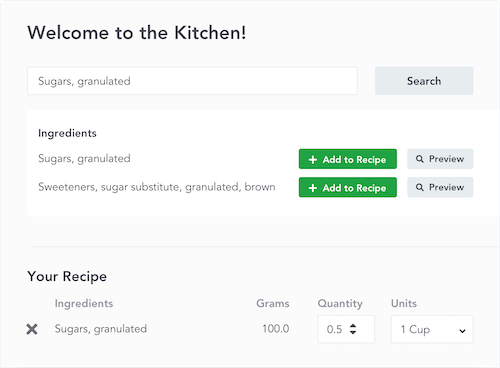
Getting there is simple. Enter your production-size batch recipe the way you make it. Then enter the cost of ingredients the way you buy them, like a 50 lb bag of flour. ReciPal handles the conversions and shows your cost breakdowns.
"I simply love the user interface and ability to track an ingredient's cost to calculate the recipe cost." — James Spence, Owner, Unique Tastes Bakery

Start with costing, scale into inventory
Other packaged food tools make you run your full inventory through them before you see a single cost. That's a lot of setup if all you need is to know what a product costs to make.
Simple recipe cost calculators have the opposite problem: they can't grow with you. ReciPal does both.
- Start simple. Cost individual recipes without setting up inventory.
- Scale up when you're ready. Tie the same recipes to inventory management: production runs, stock counts and purchase prices.
- No switching tools. Your recipes, costs and history carry over as you grow.
Built only for food
Some packaged food tools also serve cosmetics or general manufacturing. ReciPal serves food businesses only.
That means features like sub-recipes, nutrition labels and lot tracing are built around how food is actually made and sold.
Key recipe costing features
- Cost per batch and per package. Every recipe splits into food, packaging, labor and overhead. Try it with the free recipe cost calculator.
- Non-food items in the same recipe. Add 2 hours of labor, 20 bags and a shipping box just like you add butter. The result is a full bill of materials.
- Dynamic Pricing Updates. Update an ingredient price once and every recipe that uses it recalculates.
- Margin and price planning. Set margins for brokers, distributors and retailers. ReciPal shows your cost, profit and end-consumer price.
- Cost history. Track cost history over time for ingredients and products. If a cost rises, ReciPal shows the new price needed to keep your target margin.
- One-click export. Export all recipe costs into one spreadsheet.
- Sub-recipes. Build a base dough or filling once and reuse it across products. Changes flow through to every product that uses it.

Beyond costing
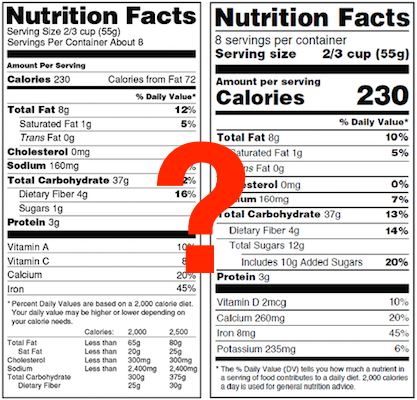
- Nutrition labels. Make FDA and CFIA Nutrition Facts panels and ingredient lists from the same recipe with the nutrition label maker.
- Inventory and lot tracing. Track stock, lots and inventory value with inventory management.
- AI Jumpstart. Paste a recipe and ReciPal finds the ingredients and amounts for you.
- Recipe library. Keep every formula in one place with cloud recipe management.
Best food cost software for:
- Packaged food brands pricing for wholesale and retail
- Bakeries, sauce makers, snack brands and beverage startups
- Businesses that want costing, labels and inventory in one place
Pricing
See full details on ReciPal pricing.
- Single Serving: $29 per recipe, no subscription. Includes basic costing.
- Business: $49/month billed annually, or $59 monthly. 1 user, 50 recipes a month, unlimited product costing and cost history.
- Business Plus: $107/month billed annually, or $129 monthly. 5 users and unlimited recipes.
- Inventory add-on: from $25/month billed annually.
Verdict
ReciPal is the best fit for packaged food brands that want their true cost per unit, and it’s the only tool here that starts with simple recipe costing and scales into full inventory. Plus it's the only inventory software here that focused exclusively on food.
2. Stocksmith (formerly Craftybase)
Stocksmith is inventory and costing software for small-batch makers, including food producers. Same team and software, new name.

Key features
- Real cost per unit from materials, labor and overhead
- Recipes and bills of materials, with automated production
- Batch and lot tracking with traceability reports
- Inventory sync with Shopify, Amazon and Faire
Best food cost software for:
Small-batch food brands that sell mostly online. If Shopify, Amazon or Faire is your main channel, Stocksmith keeps stock and cost in step with every order.
- Sales channel sync updates inventory as orders come in
- Cost per unit includes materials, labor and overhead
- Unlimited users from the Indie plan up suit small teams
Pricing
Plans start from $20/month. Recipes and lot tracking start on Indie at $83/month billed annually, or $99 monthly. 14-day free trial (Stocksmith pricing).
Verdict
Stocksmith is the best fit for small-batch food brands selling mainly on Shopify, Amazon or Faire, but wholesale-focused brands will miss nutrition labels and food-specific features.
3. MRPeasy
MRPeasy is manufacturing software (MRP/ERP) for small manufacturers. Food makers use its bills of materials as recipes to plan batches and cost them.

Key features
- Product costing from materials, labor and overhead
- Actual or FIFO inventory costing
- Lot traceability and expiry dates
- Production planning, purchasing and inventory in one system
Best food cost software for:
Established food manufacturers ready for a full ERP. MRPeasy fits a production team that plans runs, buys materials and tracks lots in one system.
- Production planning, purchasing and inventory in one place
- Actual or FIFO costing, so cost reflects what you really paid
- Lot traceability and expiry dates for recalls and audits
Pricing
Starter is $49 per user per month. Professional is $69 per user. Free trial up to 30 days, no card needed (MRPeasy pricing).
Verdict
MRPeasy is a good pick for established manufacturers ready to run production on a full ERP, but small teams will find the setup more than they need.
4. Katana
Katana is cloud inventory and manufacturing software for product brands. It includes advanced tools like demand planning and has integrations with many platforms.

Key features
- Recipes as bills of materials, with automatic manufacturing costs
- Costs recalculated from actual ingredient usage when a batch is done
- Revenue, COGS and profit per sales order
- Batch and lot tracking with expiry dates
Best food cost software for:
Mid-sized brands that want costs based on what happened on the production floor. Katana suits makers scaling output who need to see real batch costs and profit per order.
- Batch costs recalculate from actual ingredient usage
- Revenue, COGS and profit on every sales order
- A free plan for up to 30 SKUs lets you test it first
Pricing
Free plan to get started, Core Plans start at $299/mo, and Advantage plans are custom-priced (Katana pricing).
Verdict
Katana is best suited for mid-sized manufacturers that need real-time visibility into inventory, production planning, and order management, but may be less suitable for businesses looking for a simple, food-specific solution.
5. meez
meez is a recipe platform for professional kitchens. It keeps a restaurant's recipes, prep and costing in one shared place.

Key features
- Recipe database with live recipe costing
- Prep lists, training and recipe sharing for kitchen teams
- Invoice processing and costing feeds on the Premium plan
Best food cost software for:
Chef-led independent restaurants where recipes come first. meez is the pick when the kitchen team owns costing and needs one shared recipe book.
- Live plate costs sit right inside each recipe
- Prep lists and training tools keep the line consistent
- The $19/month Starter plan is the cheapest way in
Pricing
Starter is $19/month billed annually and includes basic costing, with ingredient prices entered by hand. Pro is $89/month and Premium is $179/month. 14-day free trial (meez pricing).
Verdict
Meez is good for restaurants that need to standardize recipes, manage food costs, and streamline kitchen operations, but doesn't make sense for CPG food manufacturers.
6. MarketMan
MarketMan is restaurant inventory and purchasing software. Recipe costing updates from the prices you pay suppliers.

Key features
- Live inventory, purchase orders and receiving
- Vendor management and price tracking
- Real-time recipe costing
Best food cost software for:
Restaurant groups whose biggest cost problem is ordering and stock. MarketMan is built around purchasing, so recipe costs follow what you actually pay suppliers.
- Live inventory, purchase orders and receiving
- Supplier price tracking feeds straight into recipe costs
- Vendor management across several locations
Pricing
Starter is $249/month, Growth is $299/month and Enterprise starts at $449/month (MarketMan pricing).
Verdict
MarketMan is good fit for multi-location restaurants that need tight control over ordering and stock, but restaurants focused on recipe development may be better served with other tools.
7. MarginEdge
MarginEdge automates restaurant invoices. It reads every invoice and updates costs, so food cost reports stay current.

Key features
- Unlimited invoice processing from photos of your invoices, plus bill pay
- Daily food cost and P&L reports
- Recipe costing and inventory
- POS and accounting integrations
Best food cost software for:
Restaurants buried in paper invoices. MarginEdge is the pick if data entry is why your food cost numbers are always out of date.
- Snap a photo of an invoice and MarginEdge enters it
- Daily food cost and P&L reports, not month-end surprises
- POS and accounting integrations close the loop
Pricing
$350 per location per month (MarginEdge pricing).
Verdict
MarginEdge is a strong pick for restaurants buried in paper invoices, though you’re paying mostly for automation, not recipe or menu tools.
8. Restaurant365
Restaurant365 is an all-in-one back office for restaurants. It combines accounting, inventory, scheduling and recipe costing.

Key features
- Restaurant accounting and reporting
- Inventory, purchasing and recipe costing
- Scheduling, with payroll and HR as add-ons
Best food cost software for:
Multi-unit groups and franchises replacing several systems at once. Restaurant365 makes sense when accounting, inventory and staffing all need to live in one place.
- Restaurant-specific accounting and reporting
- Inventory, purchasing and recipe costing tied to the books
- Scheduling, with payroll and HR as add-ons
Pricing
Request a custom quote (Restaurant365 Pricing).
Verdict
Restaurant365 is good for franchises and multi-unit operators ready to run their whole back office on one platform, but independents who only need food costing will find it too big and too expensive.
How to Calculate Food Cost (With an Example)
Add up everything it takes to make one batch, then divide by how many units it makes.
Cost per unit = (food + packaging + labor + overhead) ÷ units per batch
Here's a 50-jar batch of pasta sauce:
| Cost | Batch | Per jar |
|---|---|---|
| Food | $68 | $1.36 |
| Packaging (jars, lids, labels, cases) | $56 | $1.12 |
| Labor (3 hours at $20) | $60 | $1.20 |
| Overhead (3 hours of kitchen rental) | $75 | $1.50 |
| Total | $259 | $5.18 |
Ingredients alone come to $1.36 a jar. The true cost is $5.18, nearly four times higher.
Run your own numbers with the free recipe cost calculator.
Things to Know Before You Buy Food Costing Software
Ask these questions in every demo or trial. The answers tell you if a tool fits your business.
- Does it cost per package and per batch, or only per plate? Make sure you can track the metrics that matter to your business.
- Can I add labor, packaging and overhead? If not, every cost you see will be too low. Packaging is the easy to miss: jars, lids, labels, stickers, cases and shipping boxes all add up.
- What triggers cost recalculations? Some tools need a manual price update. Others scan invoices or update from supplier prices.
- Does it keep cost history? A one-time cost is out of date the next time you buy flour. History shows when a price rise is eating your margin.
- What does it connect to? Restaurants should check POS and accounting links. Packaged food brands should check inventory and labels, ideally a built-in nutrition label maker.
- What's the real price? Check for per-location fees, per-user fees, setup fees and annual contracts. A per-location price triples when you run three sites.
FAQs
What is the best food costing software for small businesses?
It depends on what you sell. For packaged food brands, ReciPal is the best pick. It costs per batch and per package, with labor, packaging and overhead included.
For small restaurants, meez is an affordable starting point.
What is a good food cost percentage?
Most restaurants aim for 25% to 35% food cost (Sculpture Hospitality). Packaged food brands think in margin instead.
Your price must cover full cost plus the cut taken by distributors and retailers. That's why cost per package matters more than a percentage.
Should labor and packaging be included in food cost?
Yes, if you want your true cost. In our sauce example, labor and packaging added $2.32 a jar.
Restaurants often track labor separately as "prime cost." Packaged food brands should include both in cost per unit.
Is there free food cost software?
Yes. ReciPal's free recipe cost calculator costs one recipe, split into food, labor, packaging and overhead.
Katana also has a free plan for up to 30 products. For many recipes, a paid plan saves time.
Can I use a spreadsheet instead of food cost software?
Yes, at first. Spreadsheets get messy as recipes and prices change.
One price change can mean editing dozens of cells by hand. Software recalculates every recipe at once and keeps the history.
Ready to find your true cost? Try ReciPal free.