How to Create Accurate Beef Jerky Nutrition Labels
Beef jerky is one of the most popular products on ReciPal—and with good reason. In fact, ReciPal was originally built to support a jerky company!
Lev, the founder of ReciPal, created the platform to help his own jerky startup, Slant Shack, save time and money on labeling. As other food makers took interest, ReciPal grew into the all-in-one solution it is today. While Lev eventually left the jerky world behind to focus full-time on ReciPal, our team still has a soft spot for this chewy, protein-packed snack.

We often get questions from jerky makers, so we’ve put together a guide to help you get the most out of ReciPal for your beef jerky business.
Choosing the Right Ingredients
For beef jerky, the main ingredient—beef—is critical. We’ve created a special top round beef ingredient in our database specifically for jerky, with nutrition adjusted for fully trimmed fat.
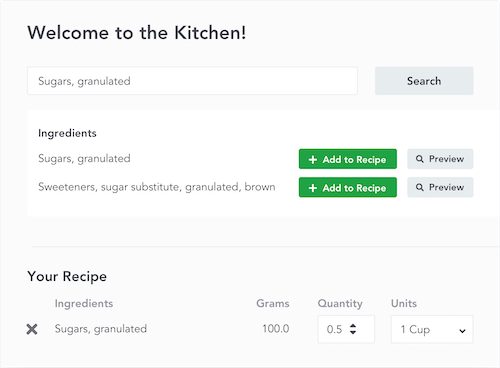
When picking your beef ingredient, make sure it reflects the fat content of your recipe—typically “trimmed to 0” fat. You can use other options from our database, but double-check that the fat trimming matches what you put in your recipe. When available, we recommend going with USDA database ingredients vs. user created ingredients. And you can even add your own custom ingredients, if necessary.
- Ingredients with one checkmark = ReciPal ingredient
- Ingredients with two checkmarks = USDA ingredient
Setting Up Your Jerky Seasoning
Whether you're dry rubbing or marinating, seasoning sets your jerky apart. ReciPal’s subrecipe feature makes it easy to manage signature blends.
✔️ Using Subrecipes for Spice Blends
Create a separate recipe for your spice blend, then convert it to a subrecipe using the “Create Subrecipe” option. Now you can reuse that blend across multiple recipes, saving time and maintaining consistency.

✔️ Setting Waste % for Marinades
Not all of your marinade is absorbed. To get accurate nutrition data, measure the amount of marinade before and after marinating, and set a waste percentage to reflect this. For example, if only 25% of a marinade is absorbed, set waste at 75%. That will allow for both accurate nutrition and product costing.
💪 Pro tip: Use a vacuum tumbler marinator to improve marinade absorption and reduce waste.
Handling Jerky Moisture Loss
It’s especially important to account for moisture loss in jerky recipes since its a key part of process.
Option 1: Set Yield by Packaging Info
This method is very straightforward because ReciPal automatically calculates moisture loss based on ingredient and final package weights. All you have to do is tell the system what you put in and what you get out. In the example below, the ingredients totaled 20 lbs and recipe produces 40, 4oz packages.

Ingredient weight = 20 lbs x 16 oz/lb = 320 oz
Final product = 40 packages x 4 oz = 160 oz
Moisture Loss = 1 - (160 / 320) = 50%
Don't get worried that you're yield gets highlighted in red. We highlight any yields below 70% which is something to double check in many recipes, but perfectly normal for jerky.
Option 2: Set Yield by Serving Size
You can also manually enter your moisture loss. For jerky, it's usually around 50%, depending on your process and texture preferences.

💪 Pro tip: A moisture-to-protein ratio (MPR) of 0.75:1 or less is required to label your product as “jerky.”
Labeling and Packaging Jerky Products
✅ Serving Size
The FDA reference amount for dried meat snacks is 30g and it's says it should show on the label as “__ pieces (__g)”. That said, since jerky rarely comes in uniform pieces, most all jerky is labeled with a serving size of 1 oz (28g).
✅ Packaging
Stand-up pouches are a common choice and often feature a clear window so customers can see your product. No matter what you choose, your packaging must:
- Be airtight and moisture-proof
- Use oxygen absorbers or vacuum sealing
- Be securely sealed to preserve shelf life
✅ Label Type
The vertical label format works well for standard jerky packs. For narrower products like meat sticks, the linear format may be a better fit.

Producing Jerky Legally
Jerky generally cannot be sold under cottage food laws. It must be made in a USDA-inspected facility. You have a few options:
- Build your own certified facility
- Use a co-packer that meets USDA requirements
- Rent time in a USDA-inspected commercial kitchen
The last option has become more common in recent years and makes it easier to get your operation up and running without cutting corners or breaking the bank.
Final Thoughts
Jerky is a fantastic product for customization—whether it’s bold flavor, chewy texture, or exotic ingredients. ReciPal helps you bring your ideas to life with accurate nutrition labels, smart recipe management, and time-saving tools made for small food businesses.
Try ReciPal today and take the guesswork out of jerky labeling.