How to Label Sea Moss
Sea moss (often sold as “Irish moss”) has exploded in popularity as gels, powders, capsules, gummies and more. This guide covers what you need to know about properly labeling sea moss.

What nutrition to expect in sea moss
In most cases sea moss products are quite simple. Sea moss is often the only ingredient. So the reliability of the underlying ingredient nutritional data is especially important.
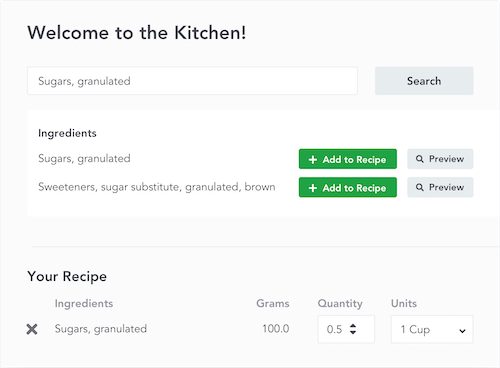
If you're using a database analysis software, like ReciPal, whatever sea moss ingredient you choose from the database (or set up yourself) will determine the product's nutrition. The software is just scaling that ingredient's nutrition to whatever serving size is set and applying the proper formatting.
Unless you've done your own lab testing, we recommend using the USDA database ingredient for sea moss
Sea moss commonly contains:
- Iodine: can be significant — some species and sources contain very high iodine (ranges vary dramatically).
- Minerals: calcium, magnesium, potassium, iron, zinc and phosphorus are often present.
- Macronutrients: mostly water in fresh/gel form; some carbs, fiber, and small amounts of protein
Nutrient levels of sea moss can vary greatly depending on its location, the season of harvest and the processing methods. If you believe your process produces better than average nutrient levels you many want to have your product lab tested versus rely on database results.
Nutrition Facts panel vs Supplement Facts panel — which to use?
Use a Supplement Facts panel if:
You market the product as a dietary supplement. In other words, it's not meant as a conventional food, but rather to increase the intake of specific nutrients for health benefits.
Looking at the serving size can be a good way to understand this distinction. If your product comes in capsules/pills, powders sold in dosage form, or gummies then a supplement label may be the right fit. Additionally, if you make structure/function claims directed at bodily functions (gut health, increased energy, etc.) you'll want to use a supplement fact panel.
Note: While supplement manufacturers can make claims about how their product supports health, those claims must be followed by the words, “This statement has not been evaluated by the Food and Drug Administration. This product is not intended to diagnose, treat, cure, or prevent any disease.”

In the example above both the serving size (2 gummies) and the marketing (gut health) mean this product needs a supplement fact panel. Ultimately, it is clearly not intended as a conventional food or the sole item of a meal.
If you need a supplement fact panel, we released a BETA tool to help you create one.
Use a Nutrition Facts panel if:
The product is sold as a conventional food (e.g., a sea moss gel marketed as a food ingredient or a beverage additive, or a ready-to-eat/drink product). Again, the serving size can be a good indicator. For example, if the serving size is 1 bottle that is more common for a conventional food than a supplement.

In the above example, sea moss is simply an ingredient in part of a conventional food, so a nutrition label is the right fit.
Serving size
The serving size will vary based on the form of the product and whether or not it requires a supplement fact panel or a nutrition fact panel.
If it is being marketed as a supplement then the reference amount should be "the maximum amount recommended per eating occasion.

If the sea moss product is part of an existing conventional food then the serving size would be dictated by the overall food's category. For example, if the sea moss is combined with other ingredients to make a fruit drink then the serving size would be 8 fl oz (240 mL).
That said, sea moss on its own (sea moss gel, sea moss powder, etc.) does not have a clearly defined category. Here are the conventions we see in the marketplace.
- Sea moss gel: Commonly 2 tablespoons, ~30g
- Dried powder: Commonly 1 teaspoon, ~3–5 grams
- Gummies: Commonly 2 gummies
Final thoughts
Sea moss is gaining popularity because of it's nutrient rich nature. Many consumers are eager to reap the health benefits of this, so it is especially important that the labeling be accurate and not misrepresent any claims.
Whether you need to create a supplement fact panel or nutrition fact panel, ReciPal has got you covered.